


As fiber broadband rapidly expands across residential communities, commercial districts, and smart city infrastructure, network operators face immense pressure. The challenge? Deploying Fiber-to-the-Home (FTTH) services faster while keeping capital expenses (CAPEX) and operating expenses (OPEX) low.
Interestingly, the biggest bottlenecks rarely originate in the active network. Instead, they occur within the Optical Distribution Network (ODN). Traditional ODN construction complexity, heavy fiber splicing requirements, and poor resource management frequently derail project timelines.
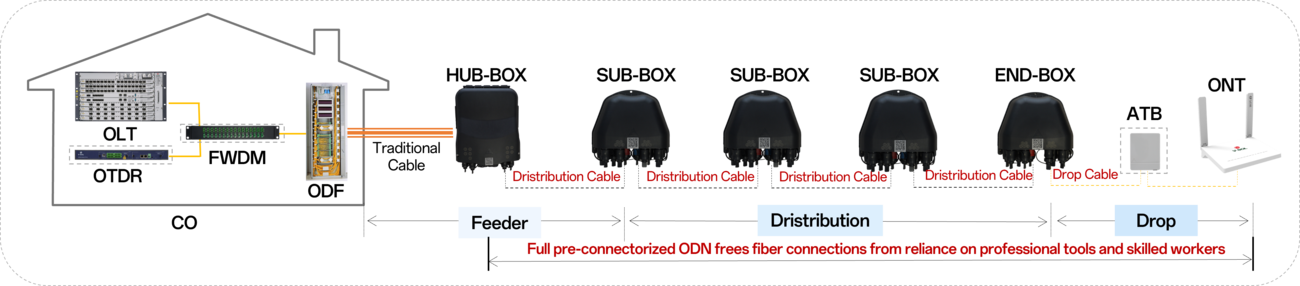
To solve this, VSOL developed the MentisODN Solution—a digital, pre-connectorized ODN architecture designed to simplify fiber deployment from initial construction through to long-term operations.
>> Contents
Why Traditional ODN Deployments Create Costly Bottlenecks
While passive optical network (PON) active technologies have evolved at lightning speed, legacy ODN construction remains stuck in the past.
[Traditional ODN Workflow] ──> Requires On-Site Splicing ──> Skilled Labor Shortage ──> Slower Rollouts
Conventional deployment methods require extensive on-site splicing and manual field configurations. Every single distribution point demands:
- Highly skilled optical technicians.
- Specialized, expensive fusion splicing equipment.
- Significant, unpredictable installation time in the field.
As operators attempt to scale, these requirements create a massive bottleneck—especially in regions facing a shortage of qualified fiber technicians.
The pain doesn’t stop after initial construction. Every new subscriber activation or routine maintenance task requires reopening distribution boxes and handling delicate internal fibers. Over time, these repeated physical interventions degrade network reliability and drive up operational costs.
Furthermore, because traditional passive infrastructure lacks built-in intelligence, operators must rely on manual paperwork to track utilization. This results in poor visibility into actual network assets.
The Shift to Pre-Connectorized ODN: A New Deployment Model
Pre-connectorized ODN solutions fundamentally change the game by shifting installation complexity from the field to a controlled factory environment.
Instead of manual fiber termination and splicing on-site, critical components arrive pre-assembled, factory-tested, and completely ready for installation. Field crews simply connect pre-terminated cables to prefabricated distribution nodes using standard, plug-and-play interfaces.
[Pre-Connectorized Workflow] ──> Factory-Terminated Components ──> Plug-and-Play Field Install ──> Rapid Scale
This structural shift streamlines construction workflows in two major ways:
- Parallel Workstreams: Node equipment and cable assemblies can be deployed independently. This allows multiple construction teams to work simultaneously.
- Reduced Labor Dependencies: Rollouts become faster and highly predictable, eliminating the need for specialized fusion-splicing labor at every node.
Operators can leverage standardized, factory-controlled manufacturing to achieve flawless, repeatable consistency across their entire footprint.
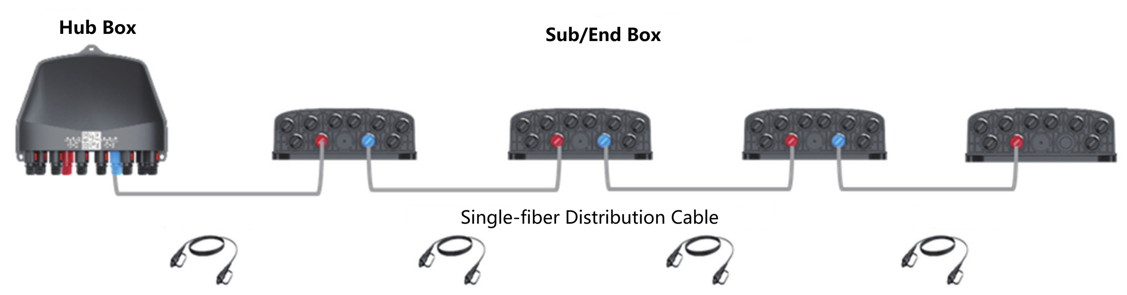
Inside the Technology: The Core Pillars of VSOL MentisODN
The VSOL MentisODN framework integrates several cutting-edge technologies to maximize deployment efficiency and long-term network health:
1. Plug-and-Play Pre-Connectorized Architecture
Eliminates up to 90% of traditional field splicing. By utilizing factory-terminated cables and plug-and-play optical nodes, operators experience faster service activation and effortless network expansion.
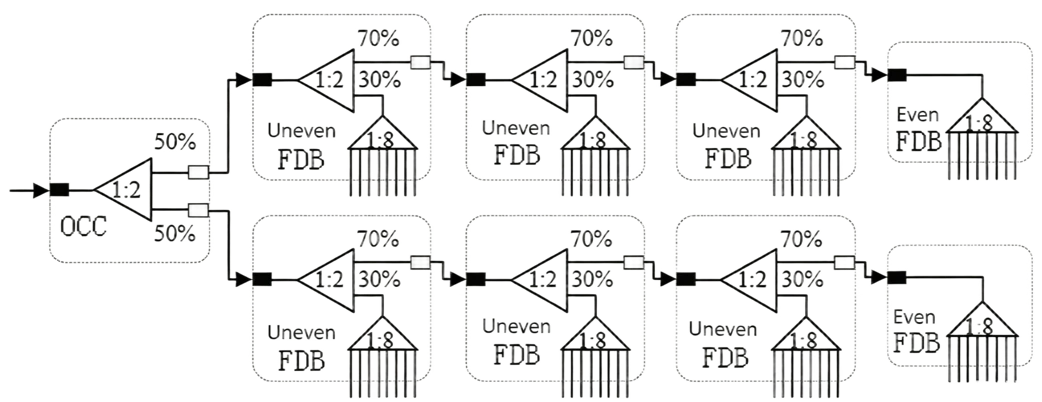
2. Uneven Optical Splitting Technology
Offers a highly flexible alternative to rigid, even-splitting architectures. By intelligently optimizing optical power allocation across cascading distribution nodes, operators can seamlessly support varying subscriber densities while maintaining standard PON split ratios.
3. IP68-Sealed Distribution Nodes
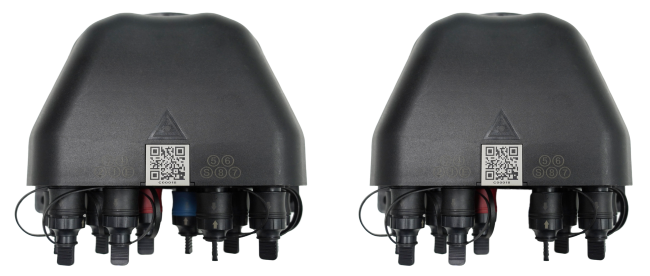
Traditional fiber boxes must be opened repeatedly, exposing delicate glass to elements. MentisODN Sub Boxes and End Boxes feature external connection interfaces protected by an IP68 weatherproofing rating. This completely shields internal components from dust, moisture, and extreme outdoor environments.
4. Advanced OTDR Fault Localization
When a fiber break or signal degradation occurs, the system supports Optical Time-Domain Reflectometer (OTDR) testing to pinpoint the exact location of the fault along the optical path. This significantly cuts troubleshooting hours and minimizes subscriber downtime.
| Core MentisODN Technology | Primary Operational Benefit |
| Pre-connectorized Architecture | Eliminates field splicing; slashes deployment timelines. |
| Uneven Optical Splitting | Enables highly flexible, scalable topology design. |
| IP68 Sealed Nodes | Maximizes outdoor environmental protection and reliability. |
| OTDR Fault Localization | Speeds up troubleshooting and lowers Mean Time to Repair (MTTR). |
| Digital Resource Management | Eliminates manual record errors with real-time asset visibility. |
From Faster Deployments to Smarter Operations
The financial return on investment (ROI) of a pre-connectorized network extends far beyond the day of installation. As networks scale, maintaining accurate visibility into passive infrastructure is notoriously difficult. Traditional ODNs suffer from outdated spreadsheets, phantom capacity, and topology records that drift over time.
MentisODN solves this by embedding QR codes and barcode identification directly into the hardware hardware.
- During Construction: Field technicians quickly scan the distribution nodes and cable assemblies via a mobile app to automatically register the asset and map the network topology.
- During Provisioning: New subscriber drops are instantly linked to specific ODN ports in the system.
- During Maintenance: Every physical change automatically synchronizes with the central database, providing a “living” digital twin of the passive infrastructure.
Adaptable Across Varied FTTH Scenarios
No two deployment areas look identical, which is why adaptability is crucial for a standard architecture:
- Rural & Low-Density Regions: MentisODN’s cascading uneven-splitting models allow operators to stretch fiber further along rural roads with minimal upfront infrastructure investment.
- Suburban Districts & Commercial Zones: Balanced distribution setups offer seamless, modular growth as business and residential adoption rates rise.
- MDUs & High-Density Communities: High-capacity pre-connectorized options distribute fiber efficiently through vertical risers and tight apartment pathways without losing plug-and-play simplicity.
By using a single, unified deployment philosophy across all these environments, operators can standardize their construction training and simplify long-term inventory management.
Conclusion: Ready for Next-Generation Fiber Rollouts
Pre-connectorized ODN solutions are no longer a luxury—they are a core requirement for modern, competitive FTTH rollout strategies. By removing the bottleneck of manual field splicing, optimizing environmental durability, and introducing automated digital asset tracking, they allow operators to scale their footprints without risking quality.
The VSOL MentisODN Solution provides a complete blueprint for this modern approach. It moves operators past the limitations of legacy deployments to deliver a passive network that is fast to build, simple to maintain, and ready for long-term subscriber growth.


